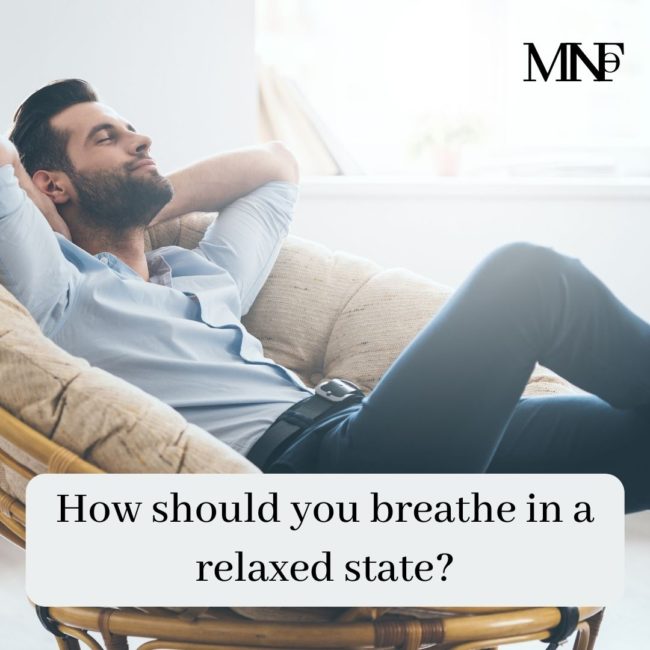
How should you breathe in a relaxed state?

[vc_row][vc_column][ultimate_spacer height=”20″][ultimate_heading main_heading=”How should you breathe in a relaxed state?” heading_tag=”h3″ alignment=”left”][/ultimate_heading][ultimate_spacer height=”15″][vc_column_text] Breathe in and out through nose with tongue sticking to palate and lips lightly in contact Activity of Diaphragm while breathing in and relaxation while breathing out 8-12 breaths per minute Silent (without any sound from nose, throat or chest) [/vc_column_text][ultimate_spacer height=”20″][vc_toggle…
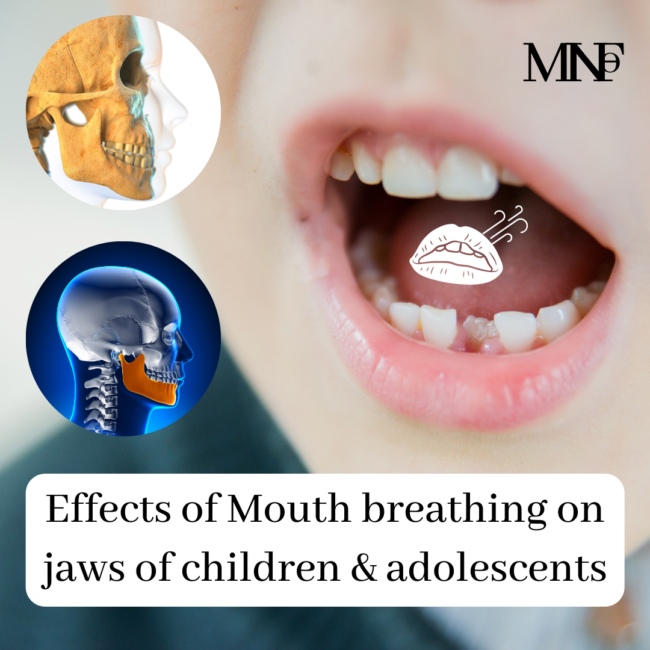
Mouth breathing effects on Jaws

Effects of mouth breathing on jaws of children & adolescents

[vc_row][vc_column][ultimate_spacer height=”20″][ultimate_heading main_heading=”Effects of mouth breathing on jaws of children & adolescents” heading_tag=”h3″ alignment=”left” margin_design_tab_text=””][/ultimate_heading][ultimate_spacer height=”15″][vc_column_text]Habit of mouth breathing alters the balance of muscles of orofacial region. This muscle imbalance, if not corrected, leads to changes in jaws. Smaller width of upper and lower jaws Inadequate space for tongue Altered structure of jaws Less forward…

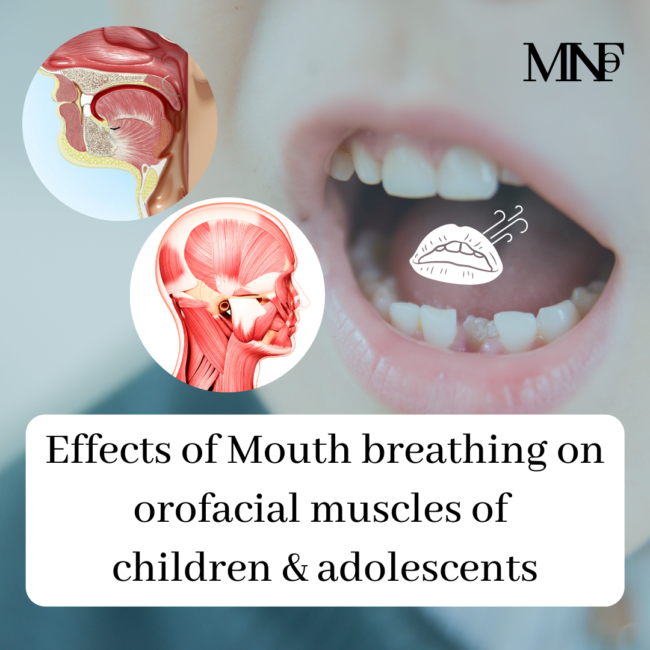
Effects of mouth breathing on orofacial muscles of children & adolescents

[vc_row][vc_column][ultimate_spacer height=”20″][ultimate_heading main_heading=”Effects of mouth breathing on orofacial muscles of children & adolescents” heading_tag=”h3″ alignment=”left” margin_design_tab_text=””][/ultimate_heading][ultimate_spacer height=”15″][vc_column_text]In order to breathe through mouth, lips and mouth need to be kept open leading to alteration in the orofacial muscle activities. Normally, there is a balance of muscle forces from inside (tongue) and outside (lips and cheeks). Mouth…

Effects of mouth breathing on faces

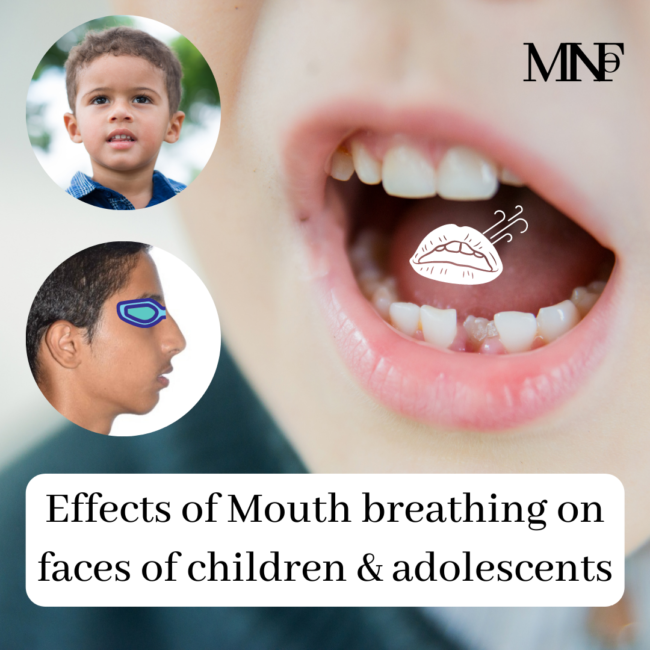
Effects of Mouth breathing on faces of children & adolescents

[vc_row][vc_column][ultimate_spacer height=”20″][ultimate_heading main_heading=”Effects of Mouth breathing on faces of children & adolescents” heading_tag=”h3″ alignment=”left” margin_design_tab_text=””][/ultimate_heading][ultimate_spacer height=”15″][vc_column_text]Mouth breathing is a habit when breathing if preferred through mouth instead of nose. This hampers all the functions of nasal breathing and affects the faces of growing children. The facial features observed are- Long and narrow face Increase in…

Functions of Breathing

Functions of Breathing

[vc_row][vc_column][ultimate_spacer height=”20″][vc_column_text]Functions of Breathing Breathing is a key function of human body. It sustains life by ventilation of air and maintenance of oxygen and carbon dioxide. There is more to breathing. The other functions it performs are- Affects the control on voluntary movements Posture control Regulation of physiologic functions Mental and emotional well being Influences…

About Diaphragm

What is Diaphragm?

[vc_row][vc_column][ultimate_spacer height=”20″][vc_column_text]What is Diaphragm? Diaphragm is a dome shaped muscle between the chest (thoracic) and stomach (abdominal) spaces. It is the main muscle involved in breathing-in. Diaphragm forms “Network of Breathing”. The functions it performs are Breathing function- Main muscle for breathing-in Posture control- By stabilizing lumbar spine Vascular and lymphatic system drainage Role in…

Positions in nasal breathing

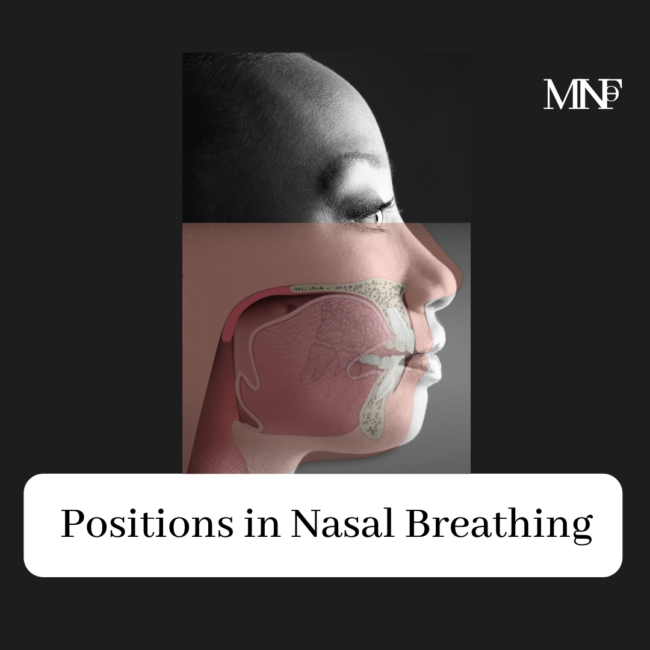
Positions in Nasal Breathing

[vc_row][vc_column][ultimate_spacer height=”20″][vc_column_text]You can breathe through your nose and/or mouth. While you breathe through your nose, tongue should lie at the roof of mouth and stick there with gentle pressure. This pulls the base of the tongue ahead opening the airway and strengthens tongue preventing it from falling back and obstructing airway. During nasal breathing, lips…

Benefits of nasal breathing

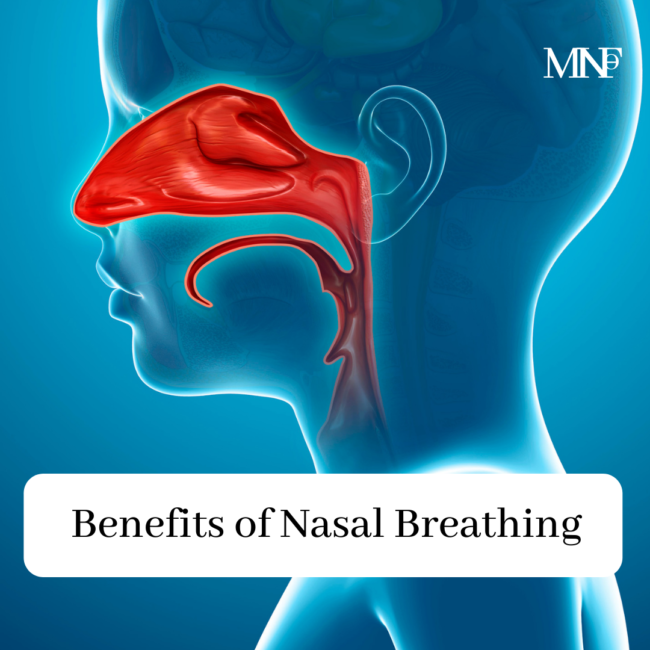
Benefits of Nasal Breathing

[vc_row][vc_column][ultimate_spacer height=”20″][vc_column_text]Benefits of Nasal Breathing Warms, moistens and filters the air Regulates (slows) airflow because of nose’s intricate structures Traps large particles with the nose hairs and small particles via mucous membranes Provides a sense of smell Retains some moisture from exhaled air, preventing nasal dryness Facilitates inhalation of nitric oxide – a vasodilator and…